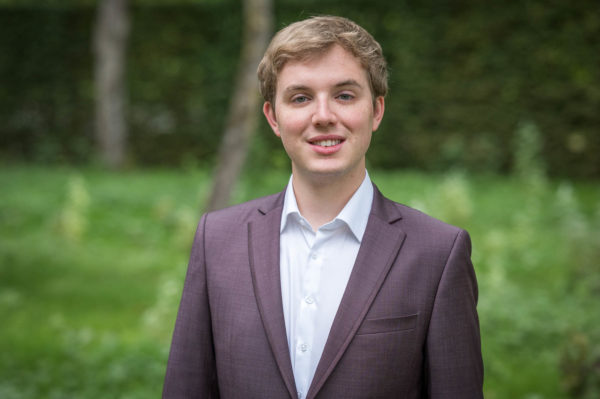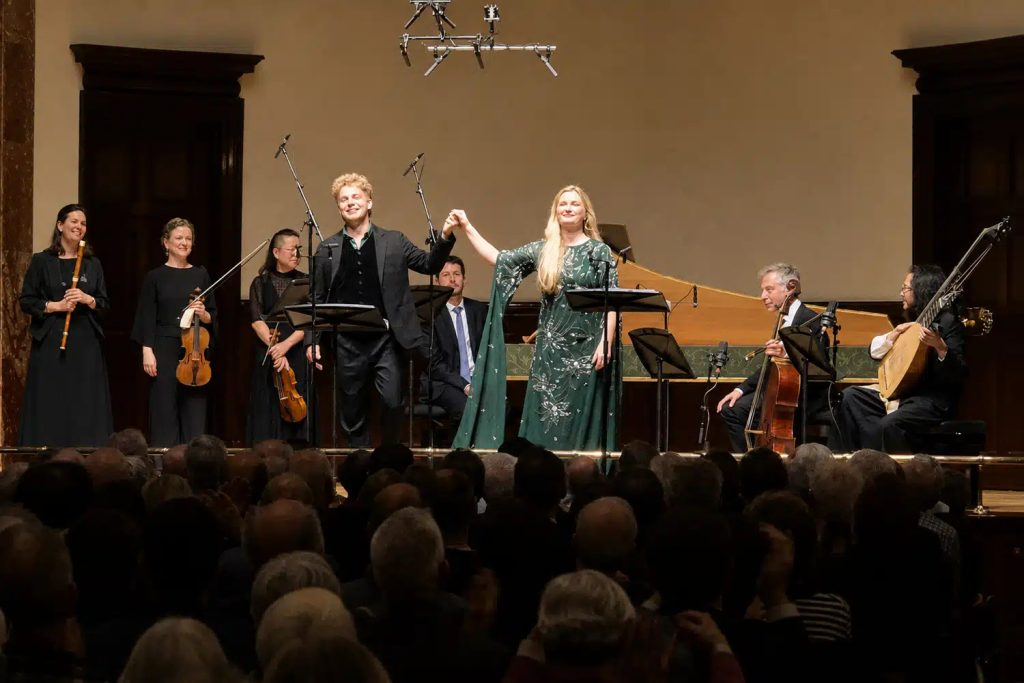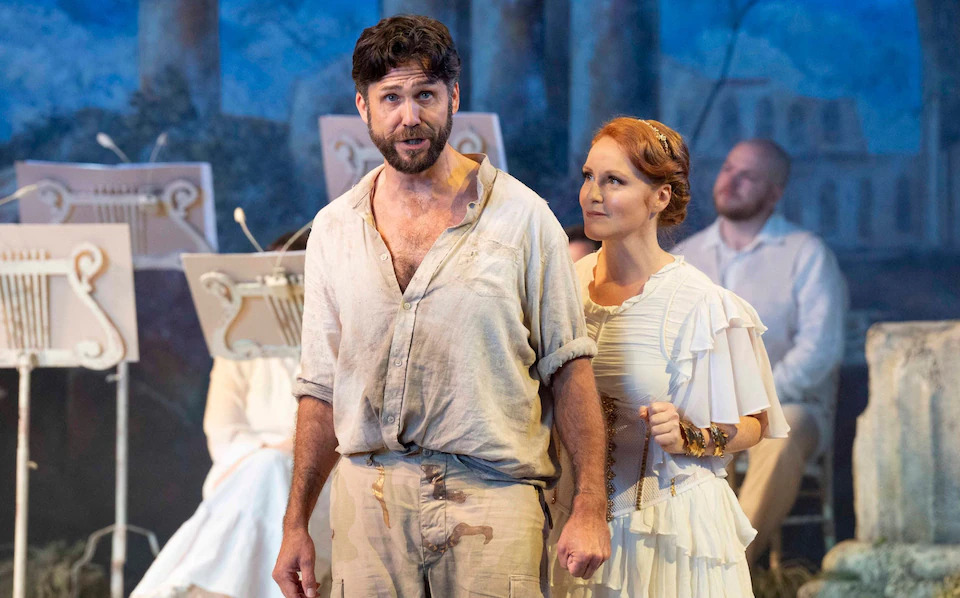
Countertenor Alberto Miguélez Rouco was born in La Coruña, Spain, where he began his musical life studying singing and piano. He went on to study at the Schola Cantorum Basiliensis in Basel, where he trained with mezzo-soprano Rosa Domínguez and completed two master’s degrees. He has also pursued studies in harpsichord and basso continuo with Francesco Corti, Giorgio Paronuzzi, and Jesper Christensen.
His operatic work spans the core Baroque repertoire. He has sung Armindo in Handel’s Partenope conducted by William Christie, performing at the Paris Philharmonie and across Europe; Ascalax in Telemann’s Orpheus with René Jacobs; Adelberto in Ottone at the Innsbrucker Festwochen; La Discordia in Legrenzi’s La divisione del mondo conducted by Christophe Rousset at Strasbourg, Nancy, and Versailles; Pisandro and Umana fragilità in Monteverdi’s Il ritorno d’Ulisse in Patria at the Teatro Olimpico di Vicenza; and the Sorceress in Purcell’s Dido and Aeneas conducted by Paul Agnew.
As an oratorio soloist he has worked extensively with René Jacobs, in Bach’s St John Passion, Handel’s Israel in Egypt, and Caldara’s Maddalena ai piedi di Cristo, among others. He has sung Handel’s Messiah, Vivaldi’s Gloria and Magnificat, Pergolesi’s Stabat Mater, Monteverdi’s Vespro della Beata Vergine, and Pasquini’s Il San Vito at the Boston Early Music Festival. He has performed Handel’s Il trionfo del Tempo e del Disinganno (Disinganno) under Paul Agnew at the Trondheim Baroque Festival, and collaborated regularly with conductors including William Christie, Christophe Rousset, and Gabriel Garrido.
Orchestral collaborations have included Les Arts Florissants, Freiburger Barockorchester, Le Concert des Nations, Hesperion XXI, Les Talens Lyriques, and Café Zimmermann. He is a member of Philippe Jaroussky’s Voice Academy.
Alongside his performing career, he founded the ensemble Los Elementos in 2018, with a focus on Spanish Baroque repertoire. The ensemble has recorded José de Nebra’s zarzuela Vendado es Amor, no es ciego for Glossa, and his solo album Cantadas — featuring music by Nebra and Francesco Corselli — was followed by a further Nebra recording, Donde ay violencia, no ay culpa.